


The Scent as Myth

27 January 2026 · perfumery · doctrine · symbolism

Among the many languages humanity has spoken, scent may be among the oldest forms of expression.
Before ink was placed upon parchment, and before monuments rose from desert stone, resins were burned in sacred spaces and aromatic oils travelled between regions. Their purpose was not adornment alone.
They became offerings.
Invocations.
Signs carried into the unseen.
Plutarch describes Egyptian worship involving resin at sunrise, myrrh at midday and kyphi at sunset. Ancient accounts of Arabian trade likewise trace frankincense from its place of origin toward Mediterranean markets.
Within these histories, fragrance appears not simply as something worn, but as something offered, exchanged and remembered.
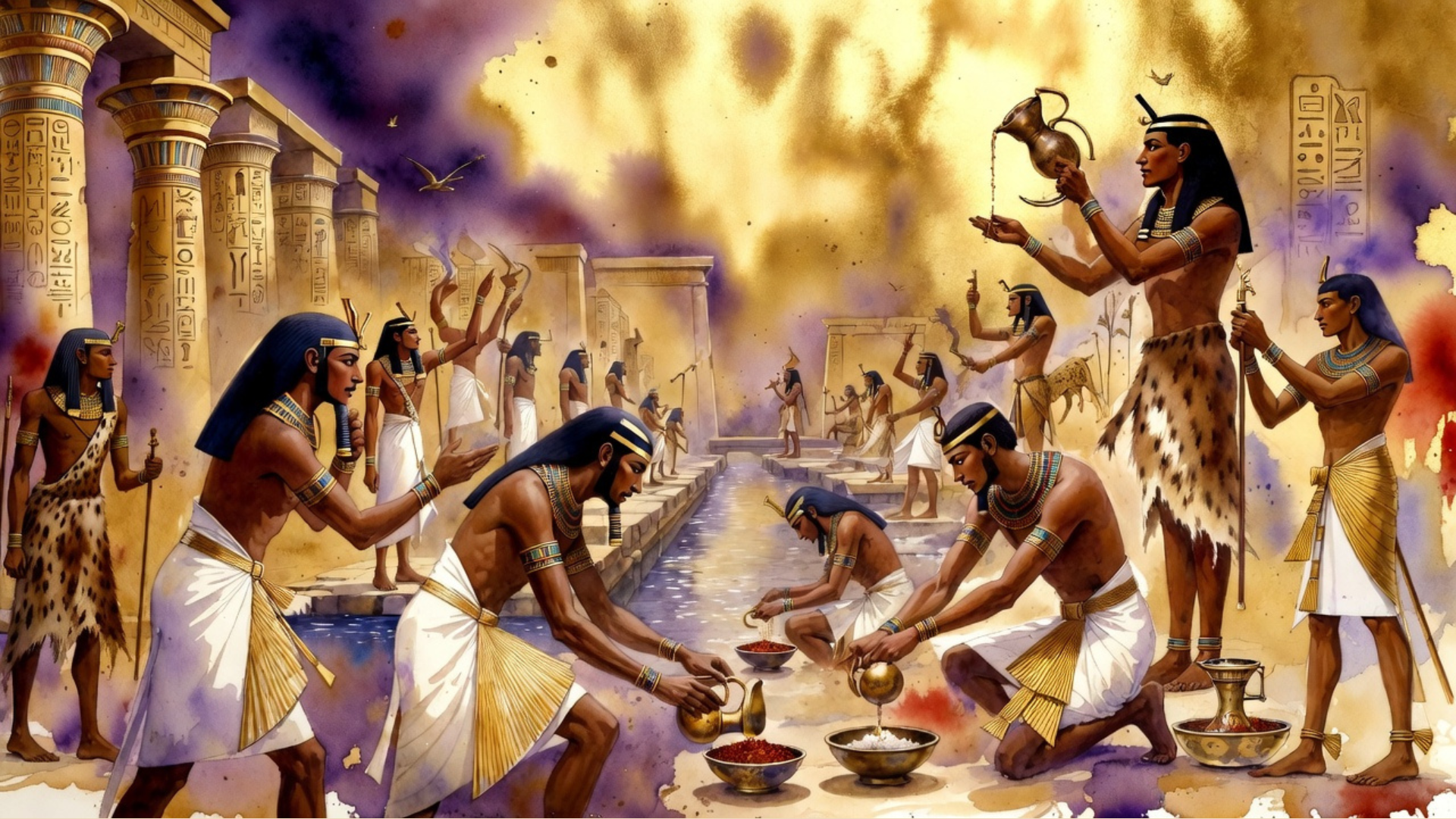
Within the House’s imagined sanctuary, fragrance becomes an offering between the visible and the unseen.
Scent travels where words cannot.
It enters quietly.
It lingers without demand.
It may return through memory without warning.
For this reason, fragrance can carry myth.
A single breath of perfume may recall a courtyard, a distant coastline or the trace of a voice once heard in childhood.
What returns is not necessarily the past in full.
It is an impression.
A fragment shaped by memory.
Research into autobiographical memory has found that odours can act as powerful emotional cues. This does not mean that scent preserves every memory faithfully. It means that an aroma may open a path toward recollection before the experience has been fully named.
Thus memory is not merely recalled.
It is entered again.
✧
The House and the Living Narrative
The House of Shaneela is founded upon this understanding.
Here, fragrance is not treated as ornament alone.
It is composed as narrative.
Each accord becomes a sentence.
Each note becomes a gesture.
Each evolution across the skin becomes the unfolding of a story.
The wearer does not simply apply perfume.
They carry myth upon the air around them.
As with all myths, the story changes with every person who receives it.
A composition does not remain fixed once it leaves the atelier. It meets skin, atmosphere, movement and memory.
No two encounters are identical.
No narrative is repeated in full.
Thus fragrance becomes something more enduring than fashion.
It becomes remembrance made invisible.
Companion manuscripts: The Palace and the Veil (opens in a new tab) and On Custodianship (opens in a new tab).
✧
Fragments of an Eternal Language
In the veiled chambers of the imagined palace, the custodians understand scent as a thread between visible and invisible worlds.
It moves between the Hall of Golden Foundations and the Starlit Veil Chamber without breaking continuity.
A composition born in silence may travel across oceans and generations. It may awaken one recognition in a private majlis in Dubai and another in a discreet salon in London.
It requires no single interpretation.
Across cultures and periods, aromatic materials have held intimate, ceremonial and protective roles.
Theophrastus examined the preparation, blending and preservation of perfumes in the ancient Mediterranean world.
The Arabic work attributed to al-Kindi, Kitāb kīmiyāʾ al-ʿiṭr wa-l-taṣʿīdāt, records a later tradition concerned with perfume and distillation.
In sixteenth-century Europe, segmented pomanders held strongly scented materials and were carried in the belief that they could protect their bearer from disease.
These practices were not identical.
They belonged to different places, purposes and periods.
Yet each reveals fragrance as more than a passing pleasure.
Scent could be interpretive.
Ceremonial.
Protective.
Personal.
Cultural histories of smell also demonstrate that the meanings assigned to fragrance are shaped by society. Aroma may become part of how communities understand identity, place, purity, danger or remembrance.
Thus what is carried is not simply fragrance.
It is continuity.
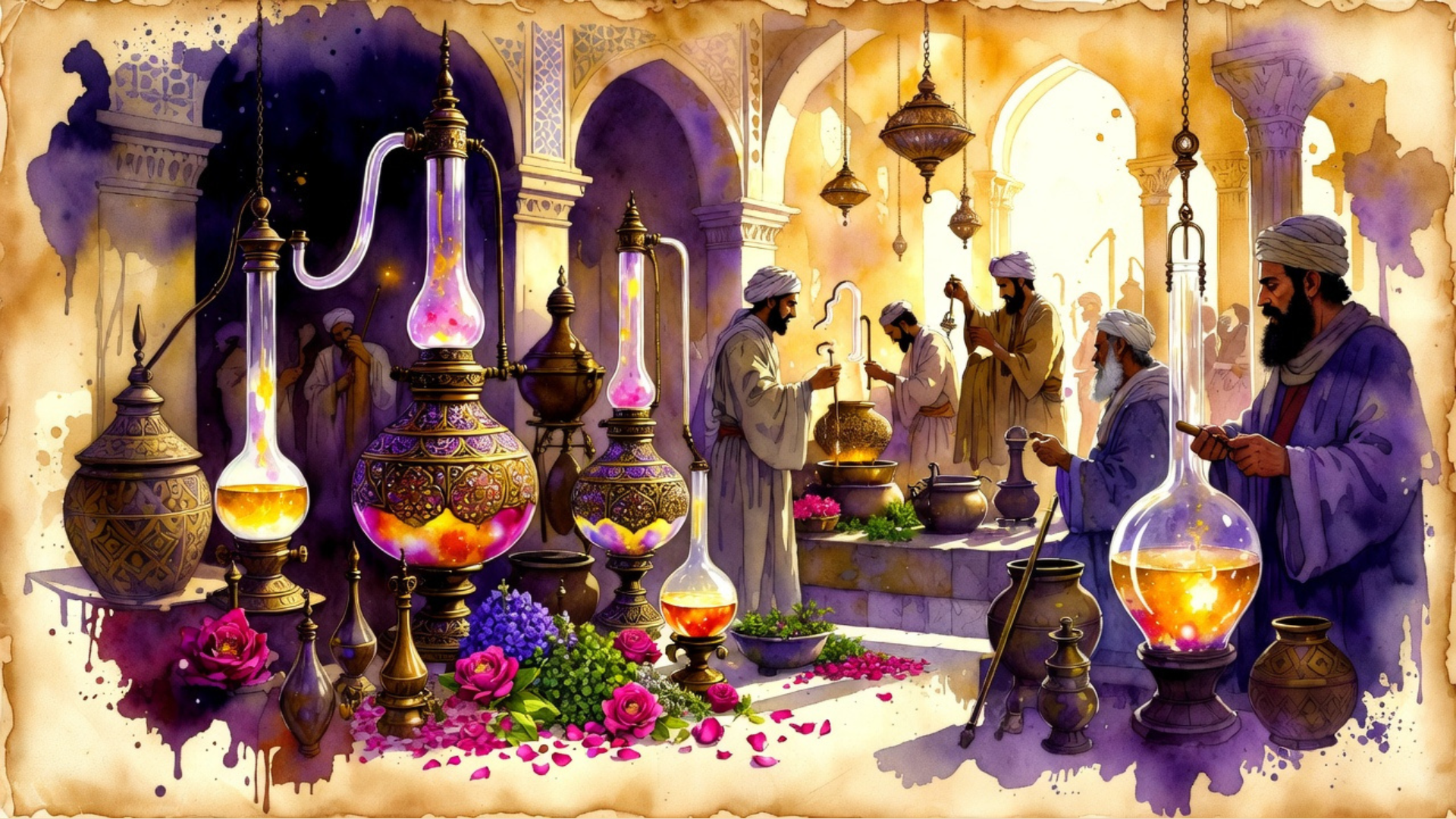
Within the House’s mythology, aromatic craft becomes an art of memory, devotion and transformation.
The Right to Carry Myth
Those who choose the artefacts of the House do more than select a fragrance.
They receive a living fragment of its language.
To carry scent in this way is not an act of possession alone, but of participation.
One does not own the narrative.
One enters it.
In time, the scent becomes part of the wearer’s own legend.
It may attach itself to places, moments and encounters that cannot be recreated.
It may remain in the recollection of others as a trace of presence.
A signature not written, but remembered.
And so the individual becomes not merely wearer, but vessel.
Not merely recipient, but continuation.
✧
The Persistence of the Unseen
Unlike a solid object, scent disperses through the air.
It cannot be held in the form in which it is experienced.
Yet an encounter with it may leave an impression.
Even in absence, an aroma can become associated with a person, place or moment.
That association may later return.
This is why the House entrusts fragrance with what must endure.
Not declarations.
Not records.
But impressions.
The impression is not an unaltered record of the past.
It is the form in which memory permits something to return.
✧
Closing Reflection
The House does not create perfume alone.
It releases echoes of the palace into the air, so that remembrance may walk beside those who receive them.
In that quiet companionship, something ancient seems to speak.
Not in words.
But in breath.
✧
References
Plutarch, On Isis and Osiris, section 52.
Describes daily Egyptian offerings of resin, myrrh and kyphi at different times. Read the translation (opens in a new tab).
Theophrastus, Concerning Odours.
An ancient examination of aromatic materials, perfume preparation, blending and preservation. Read the translation (opens in a new tab).
The Periplus of the Erythraean Sea, sections 27–29.
Describes southern Arabian ports and the transport and export of frankincense. Read the Greek text (opens in a new tab).
Al-Kindi, Kitāb kīmiyāʾ al-ʿiṭr wa-l-taṣʿīdāt.
A work associated with the ninth-century Arabic tradition of perfume and distillation. View the catalogue record (opens in a new tab).
Rachel S. Herz, “A Naturalistic Analysis of Autobiographical Memories Triggered by Olfactory, Visual and Auditory Stimuli” (2004).
A study comparing autobiographical memories prompted by smell, sight and sound. View the study record (opens in a new tab).
Constance Classen, David Howes and Anthony Synnott, Aroma: The Cultural History of Smell (1994).
A cultural study of the meanings and social roles assigned to smell. View the publisher’s record (opens in a new tab).
The Metropolitan Museum of Art, “Pomander,” sixteenth century.
A surviving segmented container made to hold aromatic substances once believed to protect against disease. View the object record (opens in a new tab).
The House, its palace and its doctrine belong to the House of Shaneela’s mythology. The historical and scientific references provide context for real aromatic practices and memory research; they do not authenticate the House’s fictional narrative.