


The Palace and the Veil

14 January 2026 · doctrine · symbolism · ritual

Long before the House revealed itself through fragrance, it existed as a quieter architecture, not of stone, but of intention.
I. The Foundations
The palace is not merely a dwelling. It is a structure of memory.
Within its chambers, time gathers rather than passes. Ideas are placed carefully, like artefacts within glassless halls. Silence is not absence, but preservation.
Every House that endures learns the same lesson: that what is shown too quickly is soon forgotten.
✧
II. Chambers of Remembrance
The palace rises in measured layers. At its deepest lies the Hall of Golden Foundations, where ancient resins and rooted woods anchor every tale in warmth and gravity. Here time settles like the warmth of a white amber accord upon skin.
Above these rise the Scented Atria, open yet sheltered colonnades where blossoms and spices move in slow, deliberate dance, never clamouring, always courteous to one another.
And highest of all, beneath the open sky of the Starlit Veil Chamber, the lightest essences rise. Citrus and green whispers carry the first greeting to the outer world.
These are not rooms of stone. They are chambers of remembrance. Every corridor holds a story. Every threshold guards a continuity.
Companion manuscript:
The Scent as Myth (opens in a new tab)

III. The Veil as Guardian
Thus the veil was drawn.
The veil does not exist to conceal beauty from the world, but to protect its meaning from dilution. It ensures that revelation arrives slowly, like the unfolding of a fragrance upon warm skin, never abrupt, never careless.
In an age when every gate is thrown open and every secret shouted into the wind, the veil teaches the rarer art of patience. It separates the worthy from the merely curious. It honours the understanding that true possession is custodianship, not consumption.
Behind the veil, the House breathes. Its chambers gather stories, its sigils mark quiet continuities, and its custodians move without spectacle. The palace remains luminous but measured, allowing only fragments of its inner life to pass beyond the threshold.
Companion manuscript:
On Custodianship (opens in a new tab)
✧
IV. The Traveller’s Encounter
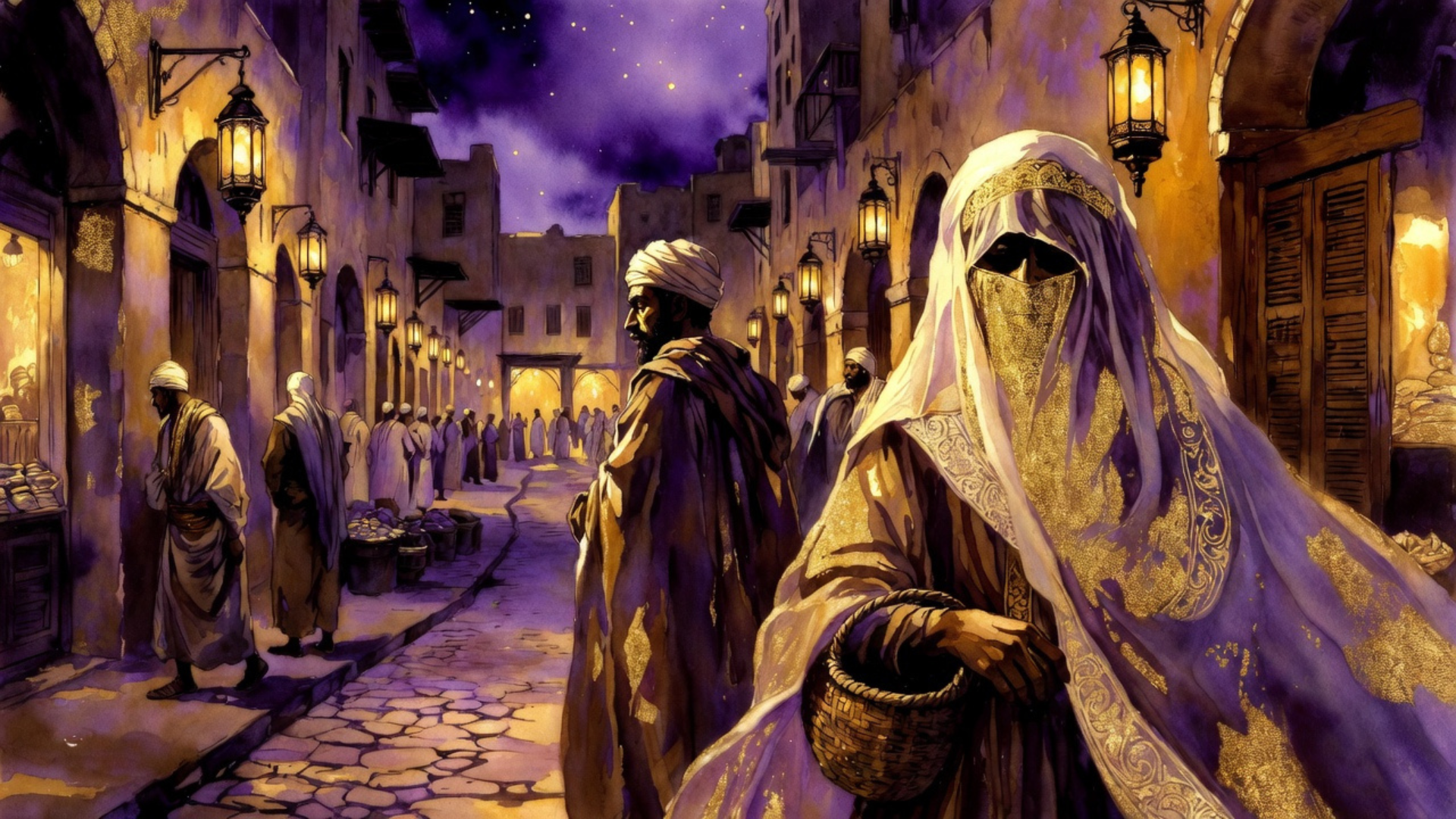
There exists among the custodians a tale of a traveller who moved between the great cities of sand and stone.
One evening in the old souks he passed a veiled figure and caught upon the air a single thread: a trace of oud laced with rose and something older still.
In that fleeting moment the palace opened one chamber to him alone. He never beheld its full architecture, yet the memory of that single breath remained with him for the remainder of his days.
Such is the power of what is given sparingly.
V. Fragments That Pass the Threshold
Those who encounter the House may see only its outer form: a fragrance, a symbol, a scroll, a whisper.
But the palace itself stands deeper than these expressions.
The artefacts that are permitted to cross the veil are never mere objects. They are scented embodiments of the inner life, living fragments of the greater architecture. Each bottle, each composition, carries within it the memory of the chambers from which it was born.
Companion manuscript:
On Custodianship (opens in a new tab)
✧
VI. The Rightful Hour
The palace is a living architecture of remembrance.
And the veil ensures that its doors open only in their rightful hour.
Those who encounter the House and feel the pull of recognition understand that they are being invited not to own, but to remember. To become living threads in its continuing legend.
For the select few who approach with reverence, the palace does not remain distant. One day the veil parts, gently and deliberately, and they step across the threshold as custodians.
That hour arrives differently for each soul.
For some, it is now.
Archivist’s Annotation I
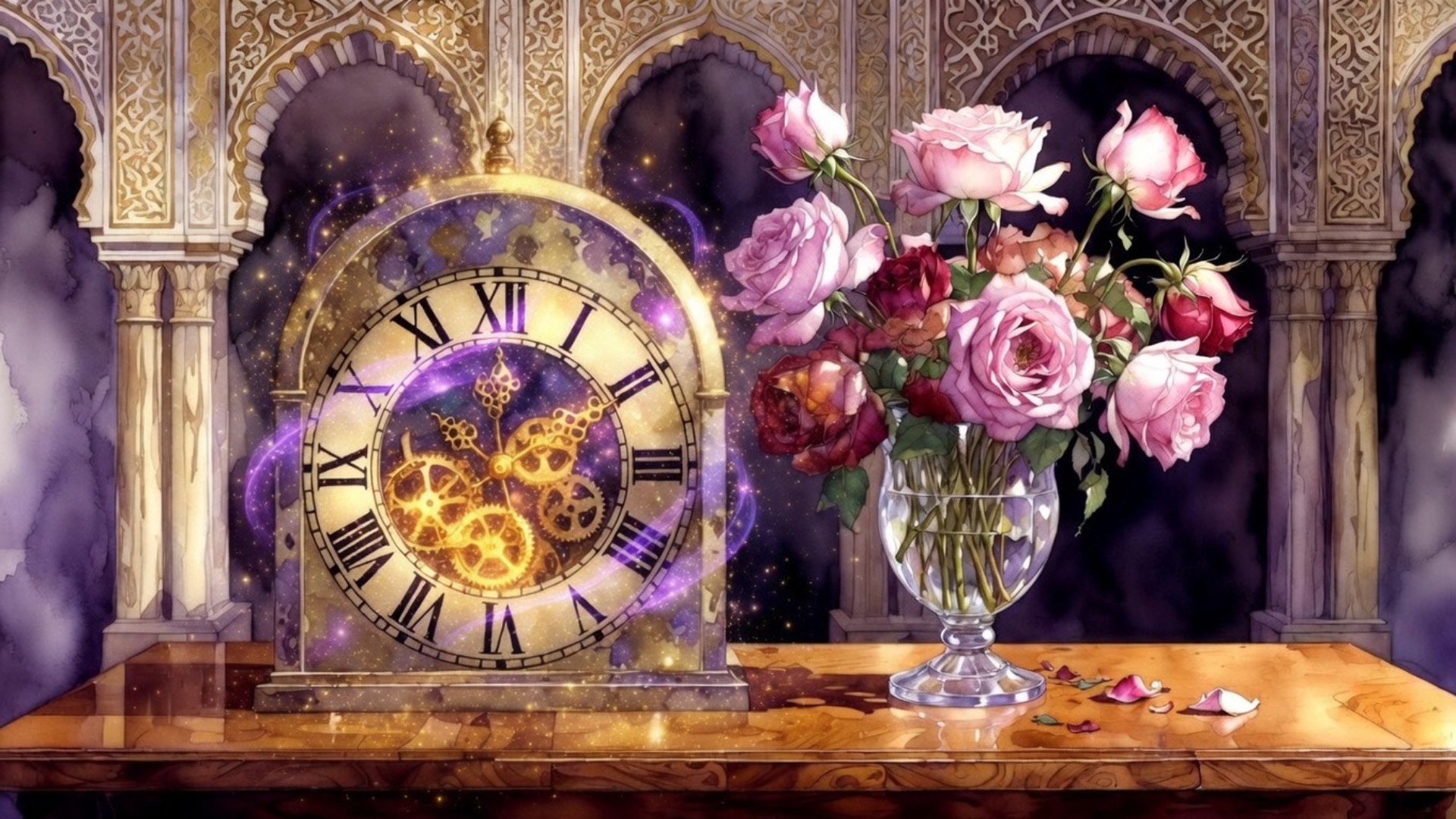
The ancient art of memory placed images within remembered settings. The House draws upon that relationship between place and recollection as a metaphor for its own imagined chambers.
So too with fragrance. It does not only adorn the present. A familiar scent may summon recollection, returning an atmosphere to the mind long after the moment itself has passed.
The palace, the veil and the traveller’s encounter belong to the House’s symbolic world.
Suggested Reading Path
The Scent as Myth (opens in a new tab)
On Custodianship (opens in a new tab)
References
Anonymous, Rhetorica ad Herennium, III.16–17.
An ancient account of organising memory through images placed within distinct settings, including architectural spaces. Read the Latin text and English translation (opens in a new tab).
Rachel S. Herz, “A Naturalistic Analysis of Autobiographical Memories Triggered by Olfactory Visual and Auditory Stimuli” (2004).
A modern study examining recollection prompted by sensory cues, including scent. View the study record (opens in a new tab).