


Record of Temple Burnings at Dusk

15 January 2026 · archive · ancient text · preservation

Status: Preserved
Author: Unattributed Temple Attendant
Recorded by: Ritual Ledger Hand
Provenance: Within the House’s imagined archive, attributed to temple records maintained across eastern Mediterranean and Levantine regions in the late first century BCE. Variations suggest multiple sites of origin.
This record appears to track not only offering, but timing.
Historical Passage: Biblical Hebrew
וּבְהַעֲלֹת אַהֲרֹן אֶת-הַנֵּרֹת
בֵּין הָעַרְבַּיִם, יַקְטִירֶנָּה
Uveha‘alot Aharon et-hannerot
bein ha‘arbayim, yaqtirennah.
And when Aaron lights the lamps at dusk,
he shall burn the incense.
Transmission Note
The passage is drawn from Exodus 30:8, where incense is associated with the evening tending of the lamps.
It accompanies this fictional record as a reference to a particular biblical tradition, not as evidence that every temple followed the same practice.
The sequence is retained.
The measure is not.
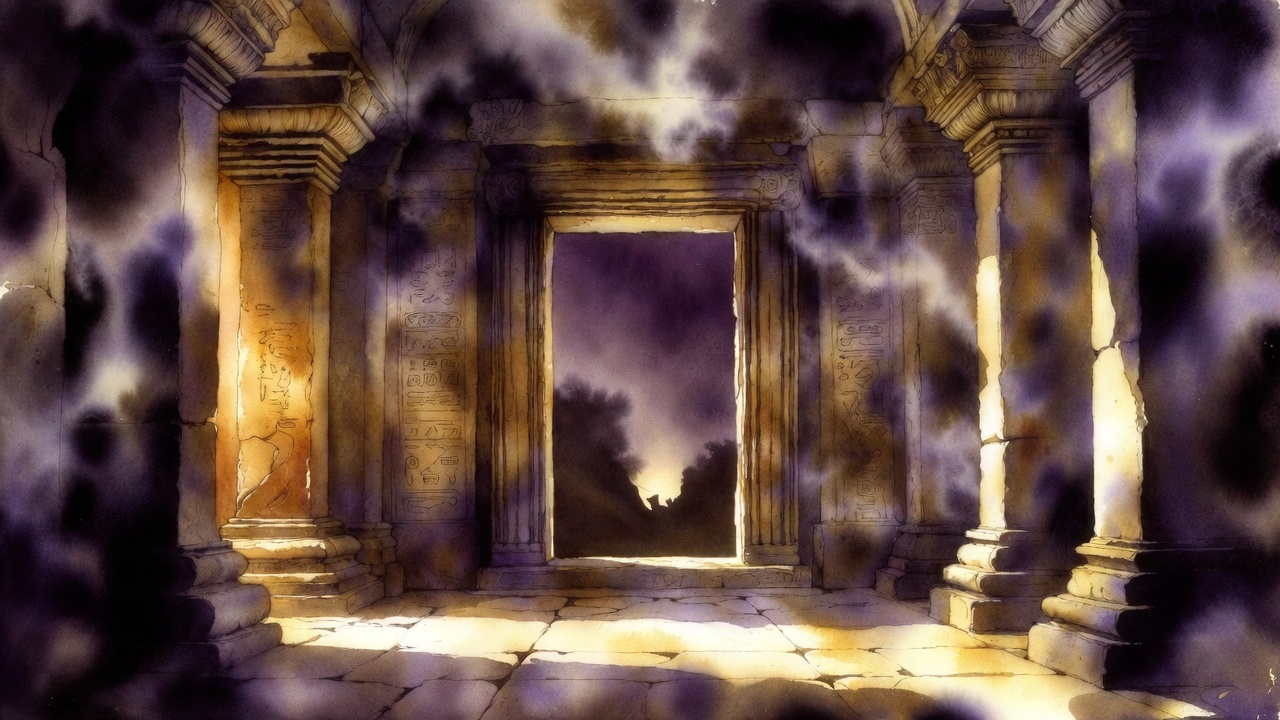
What is released… remains beyond its hour.
Continuation
The burnings were not recorded
by quantity.
Only by time.
Each entry corresponds
to a moment
between light and its departure.
Not before.
Not after.
At this interval,
the materials altered.
Resin that burned earlier
did not hold.
Resin that burned later
did not settle.
Only at dusk
did the release
remain.
It was observed:
that scent offered at this hour
did not rise
as it did in daylight.
It lowered.
It moved differently.
Not upward,
but outward.
It did not disperse.
It gathered.
Those present
noted that what was released
was not lost to the air.
It remained
within it.
The chamber did not clear.
It held.
This was not required
for offering.
But it was repeated.
The record does not explain why.
Only that it occurred.
Again.
And again.
At the same hour.
✧
References
Exodus 30:7–8.
A biblical prescription connecting incense offerings with the morning and evening tending of the lamps. The Hebrew passage above is taken from verse 8. Read the Hebrew text and English translation (opens in a new tab).
Plutarch, Isis and Osiris, §80.
A later ancient account describing kyphi offered at nightfall in Egyptian ritual. It provides a separate example of incense associated with a particular time of day. Read the passage (opens in a new tab).
The ledger and its observations belong to the House’s fiction. These sources provide context for timed incense offerings, not evidence that scent behaves uniquely at dusk or remains suspended indefinitely.