


Observation: On the Difference Between Living and Burnt Resin

17 January 2026 · archive · ancient text · observation

Status: Observational Fragment
Author: Unattributed Observer
Recorded by: Secondary Hand
Provenance: Within the House’s imagined archive, attributed to a comparative observation recorded alongside ritual and material records in the late first century BCE. Origin uncertain.
This fragment appears to distinguish between states of the same material under differing conditions.
Historical Passage: Ancient Greek
τὰ δὲ καὶ πυρώσεως
ὥσπερ ἡ σμύρνα καὶ ὁ λιβανωτὸς
καὶ πᾶν τὸ θυμιατόν
ta de kai pyrōseōs
hōsper hē smyrna kai ho libanōtos
kai pan to thymiaton.
Others require heating,
such as myrrh and frankincense
and every incense material.
Transmission Note
The passage is taken from Theophrastus, Concerning Odours, §12. It accompanies the fictional observation as a historical reference, not as a transcription of the fragment.
What is described is not separation.
Only alteration.
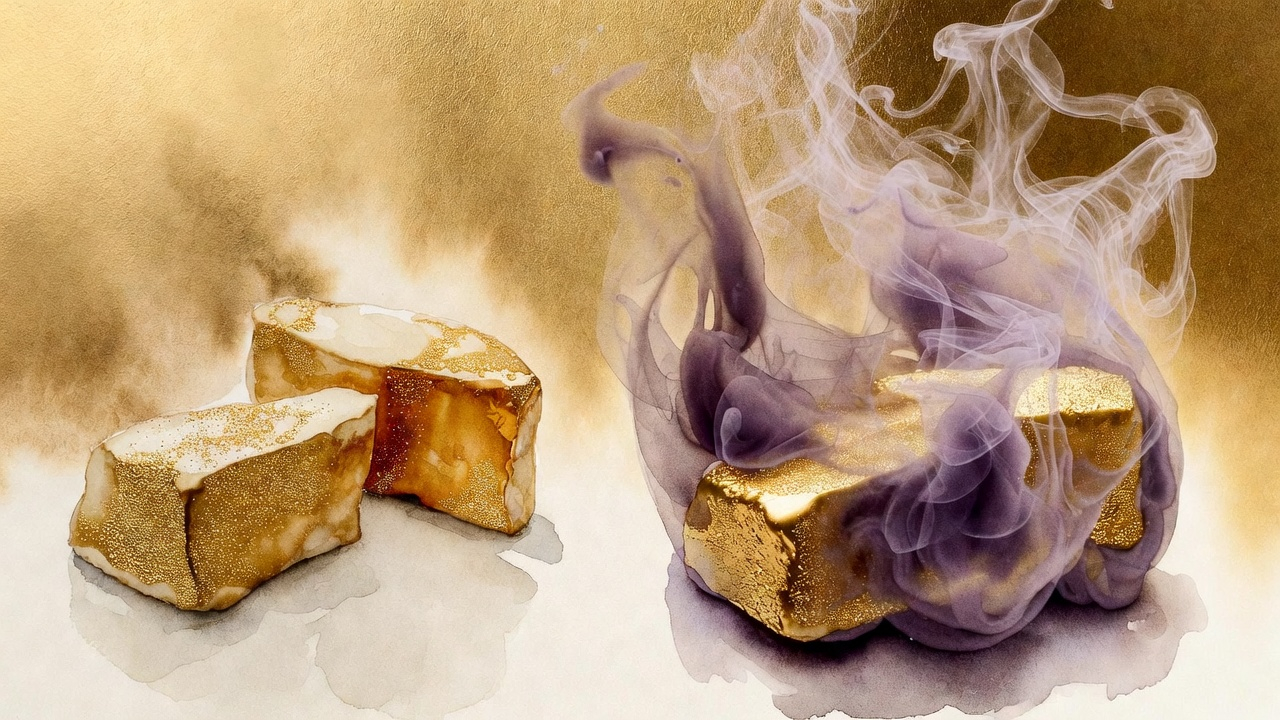
What is released… is not what was held.
Continuation
The material, when unlit,
retains its form.
Its scent remains
within it.
Present,
but contained.
When broken,
it yields
only in part.
Its presence does not travel.
It remains
near to itself.
When exposed to flame,
this changes.
What was held
is no longer bound.
It does not emerge
as it was.
It becomes
other than itself.
It was observed:
that the unburnt material
holds its scent
as potential.
While the burnt
releases it
as transformation.
These are not equal states.
One preserves.
One alters.
And yet,
what is released
is more than what was held.
It does not diminish.
It expands.
The material is reduced.
The scent is not.
What is lost in form
is gained in presence.
The record does not conclude
which state is superior.
Only that they differ.
And that the difference
is not in the material,
but in what is done
to it.
✧
References
Theophrastus, Concerning Odours, §§12–13.
An ancient discussion of scent perceived from intact, broken and heated aromatic materials. The passage above comes from §12; the following section discusses gentle heating of frankincense and myrrh. Read the Greek text (opens in a new tab) or the English translation (opens in a new tab).
The fragment and its observations belong to the House’s fiction. “Living” is used poetically for unburnt resin. The historical account of gentle heating does not establish that direct flame invariably strengthens fragrance or that scent remains undiminished as material burns.