


Fragment of a Vessel Inventory

29 January 2026 · archive · perfumery · ancient text

Status: Partial
Authority: House archive reconstruction
Prepared by: An unattributed storage keeper
Recorded by: An unidentified inventory hand
Provenance: Fictionally attributed to the late first century BCE; place of origin unrecorded
Historical Epigraph: Ancient Greek
Διαφθείρει δὲ τὰ μύρα καὶ ὥρα θερμὴ καὶ τόπος καὶ ὁ ἥλιος, ἂν τεθῶσι.
Diaphtheirei de ta myra kai hōra thermē kai topos kai ho hēlios, an tethōsi.
Perfumes are ruined by a hot season or place, or by being put in the sun.
Theophrastus, Concerning Odours, section 40
Transmission Note
The epigraph above comes from a surviving ancient work concerning perfume preparation and storage. It is included as historical context and was not recovered from the fictional inventory below.
No original inventory bearing the language of this manuscript survives. The record is a House composition informed by ancient observations about fragrance, temperature and storage vessels.
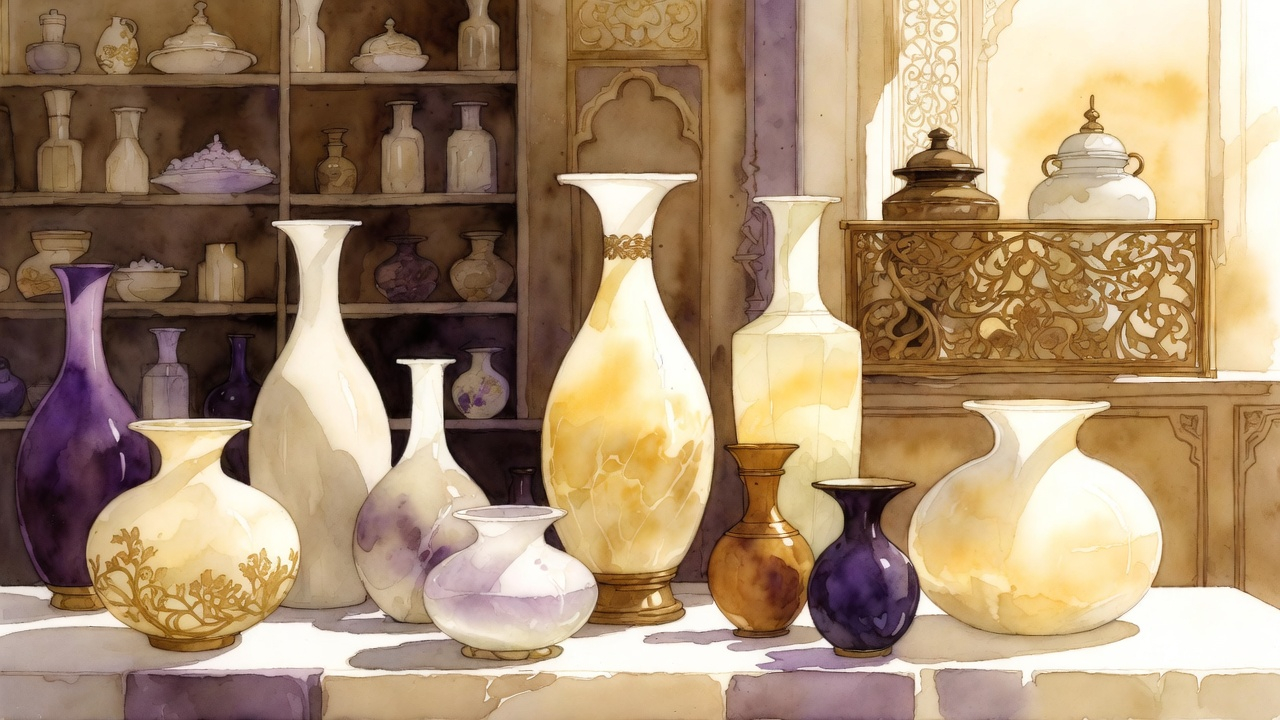
What is held is shaped by its keeper.
Inventory Surface
Three vessel groups could still be distinguished beneath the damage:
Clear glass
Necks narrow. Stoppers intact on two. Contents pale and without visible sediment.
Alabaster
Walls thick and cool to the hand. Four vessels sealed. One opened for examination.
Fired clay
Interior darkened by previous use. Resinous traces present along the shoulder and base.
The quantities once recorded beside them have been lost.
The observations remain.
The First Vessel
The oil held in glass retained its clarity.
Its colour could be examined without disturbance. The keeper noted no visible trace from what had occupied the vessel before it.
Yet light reached it easily.
The vessel revealed the condition of its contents while offering no concealment from the day.
Beside the entry, another hand added:
What allows inspection may also permit exposure.
The Second Vessel
The alabaster vessel disclosed nothing until opened.
Its surface remained cool within the shaded room. The fragrance inside appeared settled, its sharper edges drawn inward by darkness and stillness.
The inventory did not say that alabaster improved the oil.
It recorded only that the oil had endured.
The keeper marked this vessel for preparations intended to remain undisturbed.
The Third Vessel
The clay vessel carried the memory of earlier contents.
Even after cleaning, a resinous breath remained within its walls. The new oil entered alone, but did not leave alone. Something of the former preparation followed it.
The keeper therefore separated vessels that had carried resins from those intended for flowers.
Not because the clay was unworthy.
Because it remembered.
Marginal Observation
A line survives at the lower edge of the record:
The substance is named when it is poured. Its condition is known only after it has been kept.
Beneath it, in a smaller hand:
Glass permits sight.
Stone permits stillness.
Clay permits inheritance.
Choose the vessel according to what must be preserved.
Choose it also according to what may be allowed to change.
Closing Record
The inventory concerned more than quantity.
It treated the vessel as part of the fate of its contents: a boundary between fragrance and air, between preparation and time, and between one use and the memory of another.
The keeper did not claim that every material acted in the same manner upon every oil.
The surviving lesson was narrower:
Nothing entrusted to a vessel remains separate from the conditions in which it is kept.
Preservation is not stillness alone.
It is the selection of what may touch the substance while it waits.
This inventory is fictional. Its observations should not be treated as scientific guidance for modern perfume storage. The historical sources below establish that ancient writers considered heat, light, air and vessel material important to the keeping of perfumes; they do not attest to the particular inventory, vessels or conclusions narrated by the House.
References
Theophrastus, Concerning Odours, sections 38–41.
Ancient observations concerning the longevity of perfumes, protection from heat and sunlight, and the use of lead and alabaster vessels. Read the Greek text (opens in a new tab) or read the English translation (opens in a new tab).
Pliny the Elder, Natural History, Book 13.
An ancient account of unguents and their preparation, testing and storage. Read the translation (opens in a new tab).
These works provide historical context for ancient perfume-keeping practices. They are not evidence that the House inventory itself existed.