


Ceremonial Oath Concerning the Encoded Elixir

31 January 2026 · archive · ritual · preservation

Status: Preserved through House reconstruction
Authority: The Royal Court within the mythology of The Encoded Elixir
Prepared by: Office of the Royal Court Scribe
Provenance: Jerusalem, situated within the House chronology during the reign of David, c. 995 BCE
Historical Epigraph: Biblical Hebrew
מוֹצָא שְׂפָתֶיךָ תִּשְׁמֹר וְעָשִׂיתָ
Mōṣā śəfāṯeḵā tišmōr wəʿāśîṯā.
That which has gone from your lips, you shall keep and perform.
Deuteronomy 23:24 in the Hebrew verse numbering
Transmission Note
The Hebrew epigraph is drawn from Deuteronomy and is presented as a historical and literary foundation for the meaning of an oath. It is not claimed to have appeared upon the fictional record described below.
The court proceeding, its dialogue and the custodial charge belong to the mythology of the House and The Encoded Elixir.
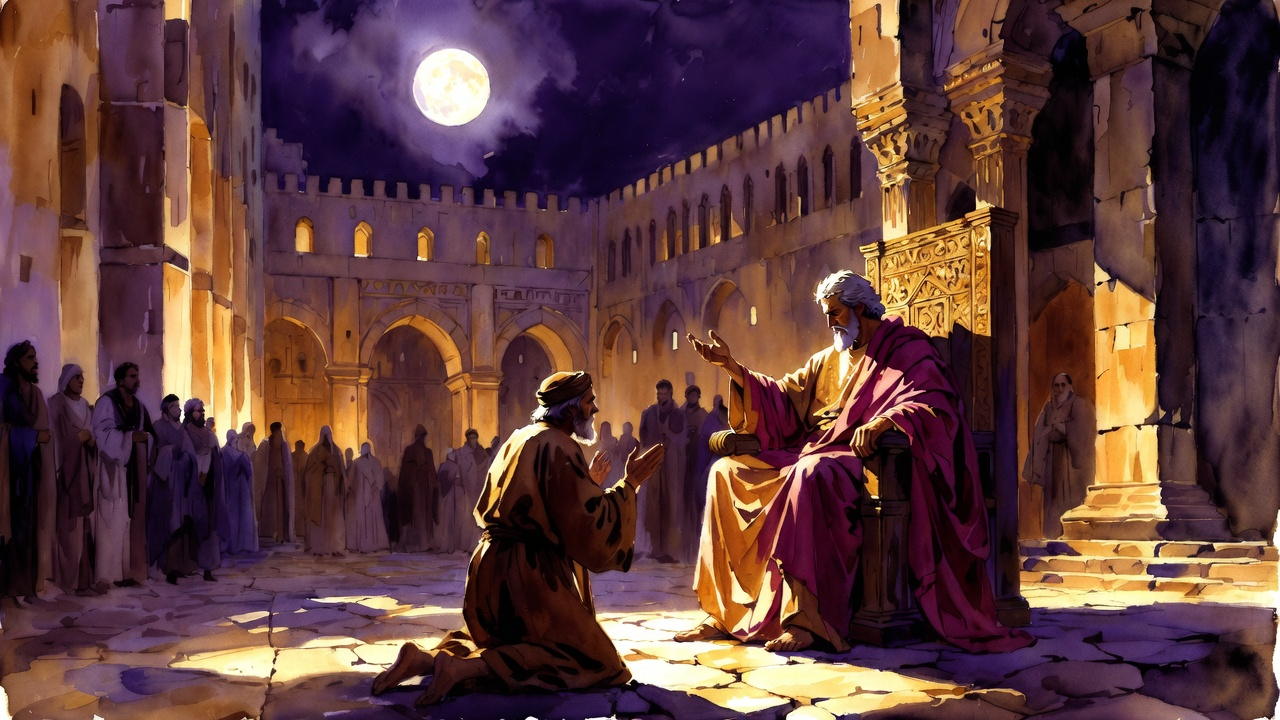
What was entrusted was not given to be owned, but to be carried.
Before the Court
The chamber had been cleared before nightfall.
Only the King, the appointed witnesses and the man called Malachi remained beneath the lamps. Nothing upon the table bore a royal mark. No inventory named what had been placed under protection.
The scribe was instructed to record the obligation, but not the substance at its centre.
For some knowledge is preserved through description.
Other knowledge survives because description is withheld.
The Charge
The King spoke first.
What had entered Malachi’s keeping was not to be treated as inheritance, reward or possession. It was to pass beyond the ambitions of the living and remain intact for a hand not yet born.
He was forbidden to open what had been sealed.
He was forbidden to alter what had been prepared.
He was forbidden to surrender it to rank, persuasion or fear.
The appointed bearer would not be known by title alone. Recognition would come through the convergence of time, knowledge and necessity.
Until then, the vessel was to remain beyond the reach of those who would mistake power for entitlement.
The Oath
Malachi placed his hand before the witnesses and answered:
I receive no dominion over what is entrusted to me.
I shall neither diminish it nor add to it.
I shall not reveal it for favour, nor exchange it for safety.
If the years exceed the life of one keeper, the charge shall pass without fracture.
If kingdoms fall, the instruction shall remain.
If its meaning is forgotten, the vessel shall still be guarded.
What has been appointed for another shall not become mine.
What must cross time shall not fail through my hand.
The Name Bestowed
When the oath had been spoken, the King addressed him not as an owner, but as Hakham: the one required to carry knowledge without placing himself above it.
The distinction was entered into the court record.
Wisdom did not consist in possessing the secret.
Wisdom consisted in knowing why it must survive.
The witnesses were dismissed separately. The written charge was sealed without description of the vessel’s contents, its preparation or the identity of its eventual recipient.
Only the duty was preserved in full.
Closing Record
Thus the first obligation was not a promise of revelation, but a discipline of restraint.
The vessel would pass from keeper to keeper.
Its substance would remain concealed.
Its meaning would wait.
And somewhere beyond the sight of the court, an appointed hand would one day receive what history had been commanded not to lose.
This manuscript is a House reconstruction belonging to the fictional world of The Encoded Elixir. Its setting draws upon biblical descriptions of David’s court and ancient teachings concerning vows, but those sources do not provide historical evidence for Malachi, the vessel or the ceremony narrated here.
References
Deuteronomy 23:22–24.
A passage concerning the keeping and performance of a spoken vow. Read the Hebrew and English text (opens in a new tab).
2 Samuel 8:15–18.
The biblical account of officers, a recorder and a scribe serving within David’s court. Read the Hebrew and English text (opens in a new tab).
These sources provide historical and literary context only. They do not attest to the fictional oath or the Encoded Elixir.